Small Molecule Synthesis Made Faster: Martin Burke on The Long Run
Martin Burke is today’s guest on The Long Run.
Marty is a professor of chemistry, Director of the Molecule Maker Lab at the University of Illinois at Urbana-Champaign. He’s well known in the chemistry field for his pioneering work on blocc chemistry: iterative carbon-carbon bond formation that makes chemical synthesis faster, highly automated, and user-friendly.

Martin Burke, professor of chemistry, University of Illinois; co-founder, Excelsior Sciences
That was a big deal for drug discovery a decade ago when it was published in Science. It’s an even bigger deal today as companies feel it’s imperative to automate physical steps in drug discovery and remove process bottlenecks so that AI can fulfill its potential.
Marty is eager to see his academic work translated into products that help people. He’s overseen work on small molecules that treat fungal infections without causing toxicity to the kidneys and ones that mobilize iron transport through tissues to treat anemia in various forms. Most recently, he’s been working on a startup in New York, Excelsior Sciences, that has raised $95 million to build an automated platform to quickly synthesize small molecules and further test and optimize them with AI. The platform is designed from the ground up so that the small molecule compounds are like tokens that AI can learn from – like large language models already with text.
Marty brings an infectious enthusiasm to his work. I enjoyed this conversation and I think you will, too.
The Long Run is sponsored by:

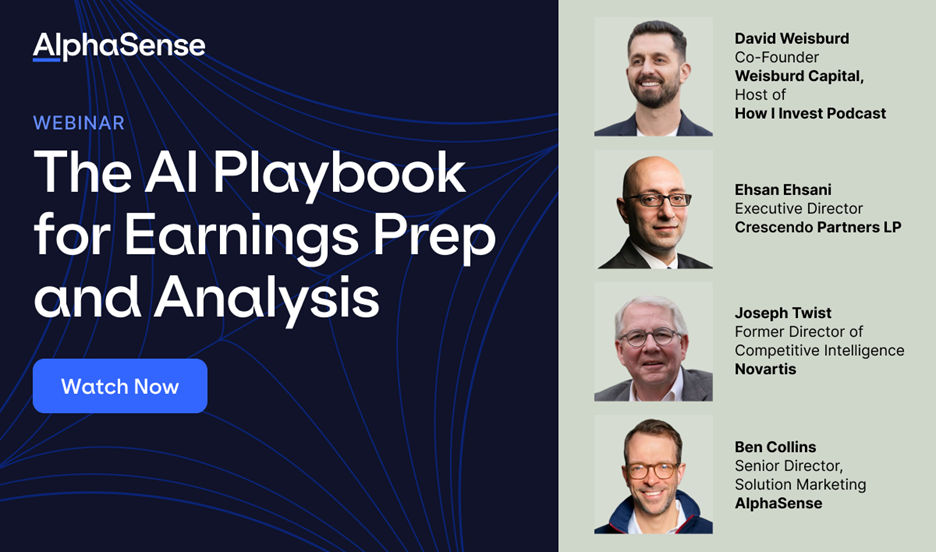
It’s earnings season, which means investors are deluged with financial reports from one company after another. It’s hard to absorb the tidal wave of information, and find enough time to think about what it means.
To help people better prepare for earnings season, AlphaSense recently hosted a webinar with a pair of investors and a former Novartis competitive intelligence director. AlphaSense’s AI platform draws on a vast pool of regulatory filings, analyst reports, expert interview transcripts, and more.
Register for the “AI Playbook for Earnings Prep and Analysis” and watch the replay here.
Bioanalysis should not rely on which scientists at the CRO you get. These are assays, not consulting. Your results should be the same, regardless of who does the work.
“We love working with our CRO… when we get the right PI” is a red flag, not a compliment. And if the quality of your bioanalysis depends on which principal investigator happens to be assigned to your study, you don’t have a CRO partnership, you have a lottery ticket.
Dash was built around automation and standardized workflows specifically to eliminate that variability. Every study gets the same rigor and the same rapid turnaround, days not weeks, across ELISA/MSD, LC-MS, and PCR. GLP-compliant, transparent pricing, guaranteed outcomes.
You shouldn’t have to ask who’s running your study. You should just get great data.
Visit www.dash.bio
Now please enjoy this conversation with Marty Burke on The Long Run.
You may also like