The Caveman’s Guide to Productivity
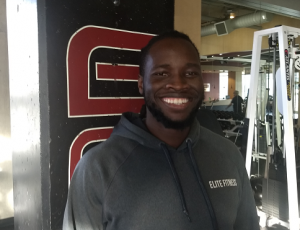
One TR subscriber already knew about some of my quirks: he and I rode in a van together for 26 hours straight to do the 200-mile Ragnar Reach the Beach Relay in New Hampshire. But when I published last month’s column detailing my Everest training, he wanted to know more. “I study performance pretty carefully, so all these kinds of questions fascinate me,” wrote Praveen Tipirneni, CEO of Morphic Therapeutic.
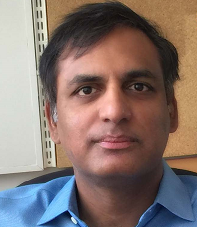
Praveen Tipirneni, CEO, Morphic Therapeutic
So, for those of you interested in the mental game and productivity in general, I’m going to go ahead and expose my inner weirdo here. Plus, it just may help the Everest Climb to Fight Cancer at the Fred Hutch. (If you haven’t donated yet, be part of the campaign that’s raised $142,000 so far for cancer research. Or join me for the star-studded Seattle Cancer Summit on March 5 and the Boston Cancer Summit March 7 — 100% of ticket sales go straight to Fred Hutch.)
If you missed the first training column, it’s a good idea to read that first. The rest of this will make a little more sense. Maybe.
Here are my answers to Praveen’s questions:
Praveen Tipirneni: How did you go about coming up with that morning routine? Did you consider anything else? If so, how did you get to this one?
Me: I’ve always been a morning person. So when I started running, to train for the 2000 Seattle Marathon, a morning run just fit. I found that running cleared some of my nervous energy and helped me relax and start the day with a lot of energy. Running seemed to help me put my best foot forward at work. I remember I was trying to make a good impression at my first major metro newspaper job, in my mid-20s, at The Seattle Times. And I quickly realized I had a natural ability for running, same as my Dad. So I stuck with it after the marathon.
Then I started covering biotech and seeing the horrors of chronic disease for so many people. I recognized that I had been dealt a good set of genetics, but it was up to me to maintain my health so that I wouldn’t be put in such a vulnerable position later in life.
Along with my run, I bike to and from work. I have never been a car commuter in the 20 years since graduating college and going to work. My wife and I have always chosen to live close enough to work that we could both bike. For eight years, we didn’t own a car. That’s one reason we had enough savings to start Timmerman Report, without seeking VC or angel money. At the end of 2015, we bought one car; we still bike for short trips.
Rain or shine, bicycling is how I get to work. There’s no choice in the matter for me on a daily basis. I don’t even think about alternatives, only maybe wearing a different piece of gear.
Over the years, I’ve adjusted my morning routine as needed. When our daughter was born in 2012, I’d get up a little earlier to run before she’d wake up. At 6 months old, I got a jogging stroller that I could buckle her into and push along the roads and trails, while my wife caught up on sleep. Now our daughter is in kindergarten. My wife freelances to be home with her after school, and I handle the morning shift. So I run early enough to be back in time to make her breakfast and get her ready for school. Then I bike to work.
How did you turn it into a habit? What failures or setbacks did you encounter? (i.e., are you able to hit everyday? Or were there days that you just didn’t feel like getting out of bed?)
I’m a huge believer that habits make us who we are. Excellence is a habit. If we are intentional about forming lots of the little habits that make us who we are, we can swap in good habits to replace some, or most, of our bad habits.
Getting to bed on time at 10 pm (8 or 9 pm during Everest training) is crucial to “setting myself up for success” the next day. I think it was Ben Franklin who said, ‘Early to bed, early to rise, makes a man healthy, wealthy and wise.’ Or something like that (see goofball meme below).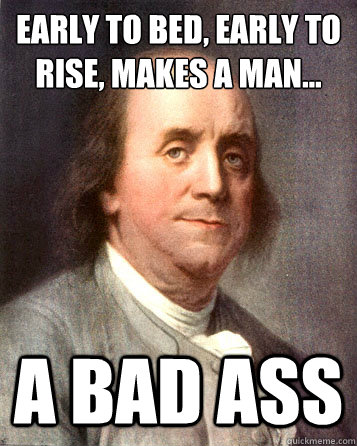
In any case, I literally can’t stay awake any later when I’m working out like this.
Running has become automatic for me because I don’t have to think about any aspect of it. My gear is always in the same place. I always leave at the same time. My route is always the same. I’m not thinking, should I run or bike today? Should I do intervals or track work? I don’t give myself the option to skip if I don’t feel like it or if the weather’s lousy. At this point it’s like brushing my teeth: it’s just what I do, every day.
Failures and setbacks? Injuries would be the big one. I’m an office worker who has at times had very bad ergonomic work posture. I’ve had off-and-on issues with lower back spasms that have been painful enough to sideline me for weeks at a time. I have a good chiropractor and manual ligament therapy guy who have helped me address my posture issues and get back running. But I feel more anxiety and blue mood swings when I’m not able to run. It motivates me to attack underlying causes of injury, whether posture or dehydration or not warming up, so that I can get back to running as soon as possible.
What obstacles were there? What did you have to change about your lifestyle? (kids / wife?)
The biggest challenge is with time management. Training for Everest is very time-consuming. It forces me to think through my priorities and discard everything that’s marginal. I deactivated Facebook a long time ago. I stopped watching TV completely – there’s no antenna or cable in our house. I used to be a big sports fan, watching perhaps 50 NFL and college football games per season (maybe 150 hours per year). This year, I watched one football game (3 hours). Basketball, I used to watch a lot, and no longer watch. I basically wake up, work out, see my family, run my business for about 50-60 hours a week, eat and sleep. Recognizing the toxic and manipulative effects of social media, I have greatly curtailed my use, and greatly increased my reading of books in the evening. This is about maximizing time. At times in the past, I’ve worked 80 hours a week in bursts, but I find the law of diminishing returns kicks in, and those extra hours usually aren’t that productive. It’s better for me to work 50-60 hours, and then replenish the creative juices for the next day by reading books in the evening.
I’m not great at keeping in touch with my friends and family, but I play fantasy baseball with long-distance friends, my wife and I host occasional game nights, we have a theater subscription with friends, and I try to call my parents every other week.
There are other more mundane things about life that I just choose to de-prioritize, if not ignore. Personal grooming, for instance. I only shave once a week. I shower once a week, sometimes less. I let my hair grow long, cut it maybe once every 4-6 months. Some of this is a function of being a bootstrap entrepreneur. I don’t have a boss, or colleagues, or shareholders. When I worked at Bloomberg News, I once showed up in a nice sweater instead of a shirt and tie. My editor said “What the hell do you think this is, a volleyball match? Come here tomorrow wearing a tie.” Now that I run Timmerman Report, the only thing that matters in my business is whether my creativity shines – I can skip all that other stuff that’s time-consuming and not value-adding.
You may wonder, “Don’t you stink?” Curiously, no. I can’t prove it, but I believe that dropping deodorant and all those soaps and other fancy things consumer-product companies want us to buy has prompted my microbiome to adapt to a new reality. I sweat a lot, three to four times a day, and yet don’t get stinky. I do change into clean shirts at the office, and I do my laundry regularly, because the clothing will smell. But dropping all these aspects of personal grooming frees up time for me to focus on my business and other things I’m interested in.
Of course, I want to be respectful of cultural norms when I go places, so I wear a sport coat when I go to JP Morgan, try to look professional when I show up for a “Hood” book talk, etc. But those are only occasional time investments.
In general, I question cultural norms. Why is everyone showering 15 minutes a day? Why is everyone driving to work? Because everyone else is doing it. I don’t think that’s a good reason. I might do it, but it better be for another reason.
I’m like a caveman. After Everest, I should go around giving a talk called The Caveman’s Guide to Productivity.
Was there any discussion of cost benefit with the family? Training obviously takes up a lot of time for a great cause. How did you think about the cause in comparison to opportunity cost with family time?)
Family time is very important to me, and it’s one thing I’ve tried hard to maintain. I’m home for dinner. We bought a child carrier hiking backpack. That way, we can go as a family on longer, steeper weekend hikes—which has been fun for all of us. And when my wife gives a parenting talk, is up against a book deadline, or has a nonprofit board meeting, I’m home with our daughter.
My wife and I do miss out on some evening conversation because I’m snoring so early. Work often gets pushed to the weekend. This morning she had to ask me, “How was your day yesterday?” But it’s temporary and we’re making it work. Earlier this year, when she trained for an Olympic distance triathlon, we all went to the pool together. And she and I traded off workout times during our summer road trip. Teamwork makes the dream work.
Being a solo parent for two and a half months? It’s not her preference, but she’s not overly worried about it. We are fortunate to have family nearby, as well as friends who are like family. As for our kindergartner, she thought last year’s three-week climb on Aconcagua (highest peak in South America) was long enough. She’s not keen on 10 weeks for Everest. Putting it in perspective, though, children have survived worse.
My wife knows how important the Everest Climb to Fight Cancer cause is to me—how important it is to me that I do something positive for science, something uplifting and unifying in these tumultuous times. She has been supportive of this climb (and all of my climbs over the years). It’s not only because I’m a responsible climber going with one of the best guide services in the business, but also because I haven’t neglected my family.
My family, my business, and my athletic pursuits are the things that matter most to me. So that’s what my day consists of.
You said you are doing 4 workouts. Why so many? Are you able to recover in between? Are you not reaching the intensity levels you need? I don’t believe that even Olympic athletes do 4 workouts / day (could be wrong but never heard that).
I’d say the personal trainer and the stair-climbing with a backpack are the workouts I’ve added for Everest training. I continue biking to work because that’s how I’ve always gotten to work, it’s not that intense, and there’s no parking at my office anyway, at least none I’m willing to pay for. I run for all the reasons I mentioned. It’s how I keep up my baseline fitness and it’s worked for me for my other mountain-climbing trips.
Is that too many workouts in a day? Probably. I told my wife that the biggest risk for Everest was getting lazy and not training hard enough, and she laughed. “Not for you,” she said. “Your biggest risk is overdoing it and injuring yourself before you even go.” So she reins me in, making sure I take rest days and pointing out that carrying an 80-pound backpack five months before the climb may not be super strategic. I’ve backed off, and now regularly carry 20 to 50 pounds in my training backpack.
It’s hard to strike the balance of too much or too little. This is Everest.
Also an intriguing point about being more alert in the afternoon – so would you continue this even without the challenge now that you seen the productivity enhancements.
I discovered the afternoon productivity boost by accident. While training for Denali in 2013, I did heavy backpack work on stairs near my office. (Conveniently, I work near the longest staircase in the city, the Howe Street Stairs, 388 steps. Or I do the next one over, the Blaine Street Stairs, which are about the same.) I knew I got a lot of my best ideas while running in the morning, and I noticed it again while in motion during the middle of the day. Getting the blood moving, and fresh air outside, gave me more energy to finish strong and hit my writing deadlines in the afternoon.
I’ve now also discovered what has the opposite effect: a strength workout with a personal trainer who is on a mission to kick your ass. It takes me an hour or two to recover mentally from that. So the productivity boost, at least for me, comes from 30-45 minutes of cardio.
Why the strength training?
As mentioned in the previous Everest training column, I will be pulling ropes, so that requires more core and upper body strength than I’m used to using. But there’s also a mental edge. As in feeling like I’m a lean-mean machine with a motor that won’t quit, even when there are 50 mph winds and it’s -60 Fahrenheit on the world’s highest mountain.
In terms of mental game, what are you thinking about during the workout? Listening to music / Are you able to brainstorm or get ideas for writing while working out? Is it meditative?
I don’t run with music. I do think about the day ahead while running, and often get my best ideas for the day during this time. Sometimes I feel the urge to grab a notebook and jot things down so I don’t forget.
For very long, slower runs while marathon training, or on solo weekend hikes, I like to listen to podcasts. I can get lost in listening to these things. An hour will pass and I’m almost forgetting that I’m exerting myself at 100+ heartbeats a minute. This is very creative time for me. I make novel connections, think about strategy for my business, craft the lead for an upcoming column, or come up with questions for an interview.
Are you mentally stronger when you were younger? If so, in what way? Does your motivation come from the good cause or would you be this disciplined without a motivating goal?
I’m stronger mentally than when I was younger, but some powerful lifelong habits were forged then. I’ve always been a pretty disciplined, straight arrow type. My dad was in the U.S. military Special Forces, the Army Rangers, in Vietnam. I grew up on a small family farm. Hard manual labor – heaving hay bales, shoveling corn to feed pigs, shoveling the shit, carrying 5-gallon buckets of water uphill to fill troughs – these things were a fact of life multiple times a day, every day, from about the age of 6-7 to the age of 18.
That instilled habits of hard work, doing things whether you want to or not, not wasting time. But the thing that I have now is the mental willpower to optimize. For instance, I used to drink beer fairly regularly, sometimes 1-2 a day. With Everest training, I resolved in October to eliminate alcohol completely to avoid the extra dehydration and improve my sleep. I replaced the beer with water and sparkling water. You have to plug in a new habit to replace an old one. I do have vices like drinking coffee and diet soda, which I haven’t tried to eliminate.
Any apps or workout aids you’ve found helpful?
Don’t use any workout apps. I think the technology stuff is more about data-capture for the companies to engage in advertising schemes that productize me. I see very little benefit, if any, for individual users. However, in training for her triathlon, my wife liked the Training Peaks app. Her coach loaded her workouts into the app, where completed workouts turn green and missed workouts turn red. She didn’t want to get any red ones. So whether apps are helpful may depend on your level of self-motivation—although I’d say having a coach probably makes the bigger difference.
I have a Garmin GPS running watch, which I sometimes use to check running pace. And I like noting my overnight resting heart rate (40-45 bpm). I never download the data or look at it later.
Having a personal trainer does show me what’s possible when someone else is pushing me. Two weeks ago, I decided to go fast up Mount Si, usually a two-hour hike, and it took 81 minutes. It felt like I was gliding. I felt pretty good about that. Last week, I went up the old Mailbox Peak trail – 4,000 feet vertical – in 1 hour 50 minutes, on a trail that was slushy and snowy and slow. Again, this is hammering home the sense in my own mind of anything being possible. Gliding up a 4,000-foot slope in less than 2 hours? With 40 mph winds and sleet in my face the last half-hour above the treeline? Bring it on.
Any pre-workout routine? I didn’t hear anything about flexibility. And when we were in van for Ragnar, you said you just wake up and immediately head out the door.
I used to skip the warmup, but now I do a brief dynamic warmup. I sort of goose-step, do some lateral movements, and do some shoulder circles and shrugs. I stretch my legs for a couple minutes when I get home from a run. My flexibility has never been good, and it can use more work, but I haven’t quite figured out a way to get that in the routine. I took one yoga class with my wife last year, if that counts.
Any changes in diet?
I eat a pretty big dinner. Afterward, I’m eying what’s left on my 6-year-old’s plate. Later, I snack on some cheese. Since starting Everest training, I’ve probably been eating 800-1000 extra calories a day. The bigger food budget was something we didn’t really think about ahead of time. My daughter calls me a Hungry Hungry Hippo.
It helps that I’m pretty much indifferent to the taste of food – I see it primarily as fuel for the engine. There’s quality food and there’s junk food, and I don’t want junk food in my engine. I eat a mix of protein/fat/complex carbs, green leafy vegetables, and fruits. But it’s pretty easy to make your lunch when all you need to do is dump a tin of tuna and a handful of spinach onto two slices of bread. Whereas my wife would be mixing in mayo with relish or capers, and chopping up little pieces of Mama Lil’s Peppers. I barely even know what those things are, couldn’t find them in the grocery store. I don’t want to spend time on food – thinking about recipes, prepping, cooking, cleaning up after – these things don’t strike me as good investments of time. I try to minimize the time spent on those tasks. I would never dream of spending money on fancy stuff just for flavor.
My body has this homeostasis at 170 pounds, which hasn’t changed, but I’m adding more muscle and just getting super lean now. I’m trying to add in some more fats—yogurt, nuts, eggs—to add some reserves for my body to burn high on the mountain. Like most climbers, I expect to lose 15-20 pounds on Everest, and most of that will be muscle mass. You can expect to see a scrawny character show up at BIO in Boston in early June, fresh off the mountain.