9
Mar
2020

Our Tightly Networked World: Blessing and Curse

David Shaywitz

Technology has been hailed for its ability to connect us; we’ve tended to view this is a positive development, but as rare, high-impact events like the coronavirus epidemic reminds us, a densely-networked world may also be more fragile.

The mixed blessing of interconnectivity was acknowledged back in 2005 by New York Times columnist Thomas Friedman, who observed:

“…we are now in the process of connecting all the knowledge pools in the world together. We’ve tasted some of the downsides of that in the way that Osama bin Laden has connected terrorist knowledge pools together through his Qaeda network, not to mention the work of teenage hackers spinning off more and more lethal computer viruses that affect us all. But the upside is that by connecting all these knowledge pools we are on the cusp of an incredible new era of innovation, an era that will be driven from left field and right field, from West and East and from North and South.” 

For techno-optimists like Erik Brynjolfsson and Andrew McAfee, authors of The Second Machine Age, improved interconnectivity catalyzes what they call “recombinant innovation.” This is the idea that “the global digital network” enables us to “mix and remix ideas, both old and recent, in ways we never could before.” 

They continue:

“Digitization makes available massive bodies of data relevant to almost any situation, and this information can be infinitely reproduced and reused because it is non-rival.  As a result of these two forces, the number of potentially valuable building blocks is exploding around the world, and the possibilities are multiplying as never before.”

Brynjolfsson and McAfee add, “as the number of building blocks explode, the main difficulty is knowing which combinations of them will be valuable.”

Enabling promising ideas to be shared certainly sounds like a promising premise if the global community is collectively seeking cures for cancer or approaches to sustainability. But what about when the agenda is less benevolent? Increased connectivity enables members of hate groups to find each other and mobilize. It also helps autocrats gain and maintain power (see this New York Magazine article, “Facebook Used the Philippines to Test Free Internet. Then a Dictator Was Elected”).

While many technologists see a fundamental strength of technology as its ability to quickly reach global scale – Facebook, as I recently wrote in a Wall Street Journal book review, now connects about a third of the humans on our planet – huge scale is not an unalloyed good.  While 10 distinct communities may not benefit from the efficiencies that might be possible from a single large community, they would also not be as susceptible to rare but harmful events, so-called “black swans.”

As Nassim Taleb (who popularized this term and concept in his 2007 book, The Black Swan [my Wall Street Journal review here]) writes in his 2012 treatise, Antifragile:

“Black Swan effects are necessarily increasing, as a result of complexity, interdependence between parts, globalization, and the beastly thing called ‘efficiency’ that makes people now sail too close to the wind….One problem somewhere can halt the entire project… The world is getting less and less predictable, and we rely more and more on technologies that have errors and interactions that are harder to estimate, let alone predict.  

And the information economy is the culprit.”

The risks of such rare, concerning events are of course especially on our minds today in the context of Covid-19. Taleb anticipated this in a supplemental essay he wrote for the paperback edition of The Black Swan when it appeared in 2010: “As we travel more on this planet, epidemics will be more acute—we will have a germ population dominated by a few numbers, and the successful killer will spread vastly more effectively.”

Niall Ferguson (author The Square and the Tower, about the historical impact of networks) argues in a recent Wall Street Journal essay that you can’t understand epidemics without a sophisticated understanding of networks. “Standard epidemiological models,” he writes, “tend to understate the threat posed by a virus such as 2019-nCoV, because they don’t take account of the topology of the social networks that transmit it.” 

In particular, says Ferguson, traditional theories tend not to incorporate “the social-network hubs known as ‘superspreaders.’”

This is exactly the concern Taleb had originally articulated in The Black Swan. A fundamental property of networks, Taleb writes, is that:

“there is a concentration among a few nodes that serve as central connections.  Networks have a natural tendency to organize themselves around an extremely concentrated architecture: a few nodes are extremely connected [analogous to the superspreaders]; others barely so…. Concentration of this kind is not limited to the Internet; it appears in social life (a small number of people are connected to others), in electricity grids, in communications networks. This seems to make networks more robust: random insults to most parts of the network will not be consequential since they are likely to hit a poorly connected spot. But it also makes networks more vulnerable to Black Swans.”

It’s difficult to imagine that we are likely to return (willingly) to a less-networked world. But this also doesn’t mean we need to reflexively embrace every effort to expand and intensify our networks.

I suspect Taleb’s instincts may be right: large, taut networks promising efficiency in the short run may endanger us down the line, and we might do well to deliberately trade a measure of immediate convenience for more durable stability. Our challenge – both individually and collectively — is to figure out how best to achieve this trade-off, and learn how we can most effectively leverage the power and promise of networks without succumbing to their pronounced vulnerabilities.

9
Mar
2020

Living Life Fully with Stage 4 Lung Cancer: Isabella de le Houssaye on The Long Run

Today’s guest on The Long Run is Isabella de la Houssaye.

Isabella is a former attorney on Wall Street, a mother of five kids, and a terrific endurance athlete. She’s run marathons around the country, ultramarathons, and even completed an Ironman triathlon.

Isabella de la Houssaye

She’s also a Stage 4 lung cancer patient.

She owes her life, and her vitality, to some extraordinary advances we’ve seen in cancer biology. You can listen to her describe her molecular profile, and how that fortunately matched her up with a drug from AstraZeneca that worked wonders.

She’s now making the most of every day.

Some of you may have read about Isabella in the New York Times last year. The Times wrote about Isabella climbing Aconcagua — the highest peak in South America at 22,840 feet — with her daughter AFTER being diagnosed with Stage 4 lung cancer.

If you haven’t read that story, I encourage you to go back and read it.

Seeing people like Isabella thrive is wonderful. Essentially she’s the living, breathing personification of everything I dream of through my charity work for the Climb to Fight Cancer at Fred Hutch.

Isabella’s now on a new mission. She’s bicycling across America to raise awareness for early diagnosis and better treatment for lung cancer patients. She will also be spreading the word about mindfulness and positive thinking, and how that has gotten her through some tough times.

You can follow her journey, starting in San Diego, at bikebreathebelieve.org.

As members of the biopharma industry, you get to go to work each day with people who have the capacity to extend life, and improve quality of life, for people like Isabella. It’s an amazing thing when it works.

I hope you find her story inspiring.

Now, please join me and Isabella de la Houssaye on The Long Run.

5
Mar
2020

COVID-19 Spreads in Seattle, Gilead’s $4.9B Cancer Bet, & Thermo Grabs Qiagen

Luke Timmerman, founder & editor, Timmerman Report

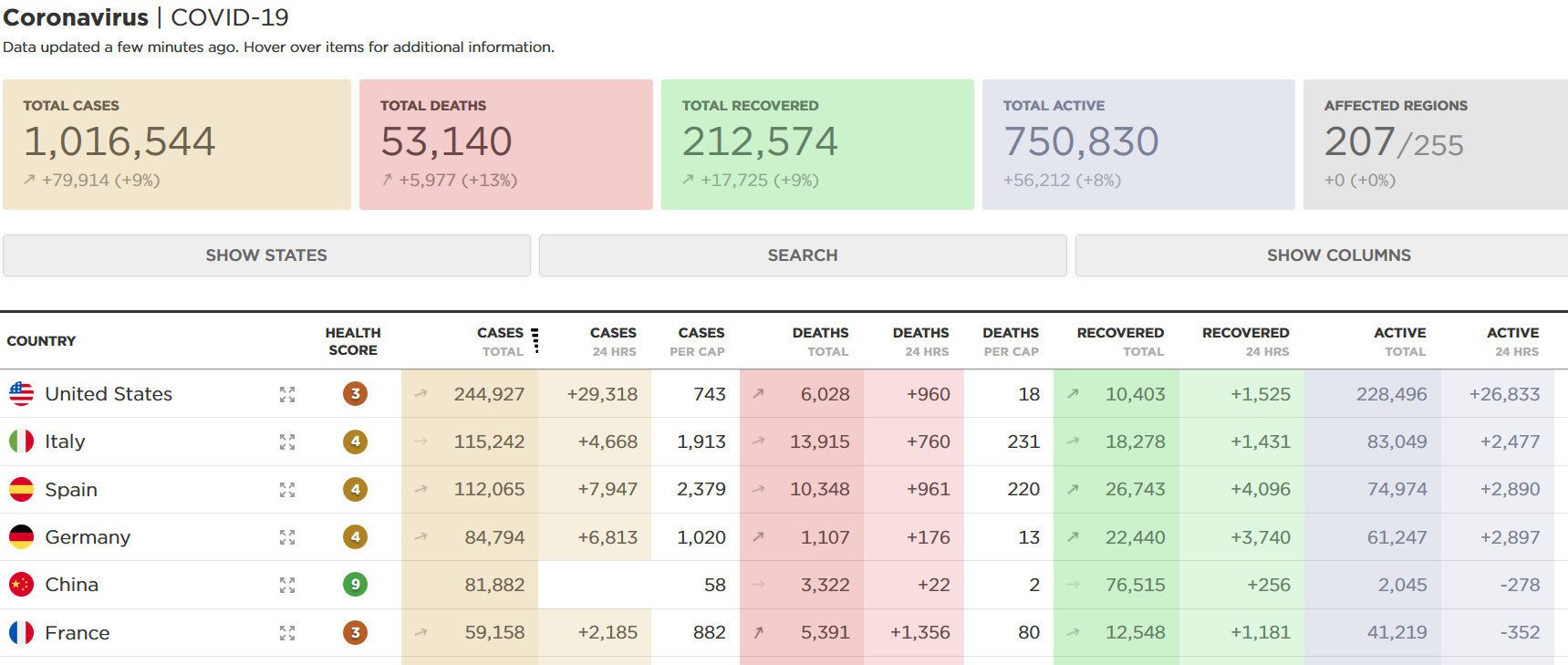
Everywhere I look — to the North, South, East and West of my home office in Seattle — there are confirmed cases of Covid-19.

It’s one thing to read about a distant outbreak and intellectually understand the pandemic math, the morbidity and mortality rates, and responsible steps for containment and mitigation.

It’s another thing to live in the middle of an outbreak.

It’s stressful. I’m not worried about myself, my wife or my daughter. We’re healthy. I am worried about healthy people like us getting sick and transmitting the bug around the community, sickening and killing other people.

So, I’m practicing self-isolation and social distancing, as recommended by infectious disease experts at the WHO.

In case you’re wondering, Fred Hutch decided this week to postpone the Everest Base Camp Climb to Fight Cancer planned for Mar. 19-Apr. 4 in Nepal. This is a team expedition I’ve organized and worked hard on for eight months. We plan to do the trip in October instead. It’s the right thing to do. Fred Hutch, by the way, also imposed a mandatory work from home policy for non-essential employees, effective Mar. 5-31.

Why the drastic action, you might ask?

This bug is highly contagious. It’s transmitted in the community via asymptomatic and mildly symptomatic people – meaning people who don’t even realize they are spreading a dangerous bug to other people. It started circulating in the Seattle area, my hometown, for about six weeks before anyone knew.

We have little idea how many people are infected in the U.S., because of a slow, bungled response to diagnostic testing. Estimates are that the fatality rate is between 1 percent and 3.4 percent. The hospitalization rate is in the 15-20 percent range. We have no proven treatment or vaccine. We don’t have enough intensive-care unit beds, or respirators, to handle a massive influx of people with Covid-19.

Many people appear to be slow to appreciate the magnitude and urgency of the threat. Some are carrying on with business as usual – like holding a 100,000-person Emerald City Comic Con conference in Seattle within days. This is foolish and dangerous at a time Gov. Jay Inslee has declared a State of Emergency.

In all likelihood, Emerald City Comic Con will help speed up the spread of Covid-19 around the country. [Update: 9:09 am Mar. 7. Comic Con chose to postpone the event.]

We are just beginning to experience a tremendous stress test on our hospitals and public health system. One-fourth of the fire department in Kirkland, Wash. has gone into quarantine, and some have developed “flu like symptoms” after responding to help people at an infected nursing home.

Think about how many first-responders around the country are now at risk.

Take a look at this statement from a registered nurse at a Kaiser Permanente facility in Northern California:

Everyone needs to pull together to find a way to contribute – federal, state, local authorities, as well as academic scientists and private industry. As written in this space last week — it’s collective problem-solving time.

The biopharma industry – vaccines, therapeutics, diagnostics companies and more – has tremendous resources to bring to bear against this challenge. People in this business have the brains, the resources, and the tenacity to step up. This is a moment for the scientific enterprise to show what it’s made of.

To help you stay on top of this fast-moving situation, I’ve curated a variety of important sources on Covid-19 from the past week, broken into topic areas.

COVID-19 Reading Summary

Epidemiology

  • China’s Cases of Covid-19 Are Finally Declining. It’s All About Speed, WHO Expert Says. Vox. (Julia Belluz)
  • Who is Getting Sick, and How Sick? STAT. (Sharon Begley)
  • Cryptic Transmission of Novel Coronavirus Revealed by Genomic Epidemiology. Bedford Lab blog. (Trevor Bedford)
  • Coronavirus May Have Spread in US for Weeks, Gene Sequencing Says. New York Times. (Sheri Fink and Mike Baker)

Policy

  • How to Respond to COVID19. And Prepare for the Next Epidemic. GatesNotes. (Bill Gates)
  • Key Missteps at CDC Have Set Back its Ability to Detect Spread of Coronavirus. ProPublica. (Caroline Chen et al)
  • Why the CDC Botched its Coronavirus Testing. Tech Review. (Neel Patel)
  • Protecting Americans From Infectious Disease Threats, Today and Tomorrow. The Hill. (Tom Frieden)
  • Helping Those Affected by Coronavirus. PhRMA blog. (Stephen Ubl)
  • Covid-19 May Have You Working at Home. WSJ. (Luciana Borio and Scott Gottlieb)
  • Science Will Get Us Out of This. Medium. (Brad Loncar)
  • Insurers Promise to Cover Coronavirus Tests, Relax Coverage Policies. Politico. (Susannah Luthi)

Biotech Response

  • Recruitment Begins for the First Test of Experimental Coronavirus Vaccine. WSJ. (Peter Loftus)
  • The Ebola Drug That’s the Top Hope for Coronavirus Treatment. Biopharma Dive. (Ned Pagliarulo)
  • Quest Diagnostics Will Start Testing for Coronavirus. CNBC. (Jessica Bursztynsky)
  • LabCorp to Make Coronavirus Test Available in US. Reuters.

Science

  • Open Peer-Review Platform for Covid-19 Preprints. Nature. (Michael Johansson & Daniela Saderi).
  • Bulk and Single-cell Transcriptomics Identify Tobacco-Use Disparity in Lung Gene Expression of ACE2, the receptor of 2019-nCov. PrePrints. (Guoshuai Cai)
  • The Effects of Evolutionary Adaptations on Spreading Processes in Complex Networks. PNAS. (Rashad Eletreby)

Communications

  • How Tony Fauci is Navigating the Coronavirus Outbreak in the Trump Era. Politico. (Sarah Owermohle)
  • Trump Tells FOX’s Sean Hannity that 3.4% Coronavirus Death Rate is False, Citing a ‘Hunch’ That WHO, Scientists are Wrong. USA Today. (David Jackson)
  • The Pandemic of Poor Communications. LinkedIn. (Gil Bashe)

Human Dimension

  • One Doctor’s Life on the Coronavirus Front Lines in China. ‘If We Fail, What Happens to You All?’. WSJ.

Tweetworthy

See this chart from the Bloom Lab at Fred Hutch. Those of you with family and friends in the elderly age bracket – this chart is a good reminder of the seriousness of Covid-19. It’s more deadly than flu, at least when looking at vulnerable elderly populations.

Also Tweetworthy

There was also a Super Tuesday election this week.

Joe Biden’s epic comeback was the story. Larry Levitt of the Kaiser Family Foundation reminded folks that while the former vice president isn’t advocating for Medicare for All, he does plan to finish some of the unfinished business in the Affordable Care Act.


Deals

Gilead Sciences, the infectious disease powerhouse that has spent the last decade trying to diversify into other therapeutic areas, made another move in oncology. This week, it acquired Forty Seven, the company working to modify the “Don’t Eat Me” signal that cancer cells hijack to escape macrophages. Gilead agreed to pay $4.9 billion in cash to acquire the company, or $95.50 a share. Forty Seven is advancing drug candidates for myelodysplastic syndrome, acute myeloid leukemia, and diffuse large B-cell lymphoma. (See Oct. 2015 TR coverage on the early movers in macrophage biology for cancer).

Thermo Fisher Scientific agreed to acquire Qiagen, the diagnostics company, for $11.5 billion. Whatever merger activities have to happen must now be secondary to an all-hands on deck approach to ramping up test capacity for Covid-19.

GlaxoSmithKline is apparently shopping around its antibiotics business, according to Bloomberg News. Maybe this isn’t the best time for pharma powerhouses to throw in the towel on infectious disease defenses, even when the market failures of the antibiotics space are well-documented. Someone needs to do this work, and that someone needs serious resources of the kind that companies like GSK can provide. Maybe you guys can tell your bankers to put that deal on the back burner?

Vir Biotechnology, the infectious disease drug developer, expanded its existing collaboration with Alnylam Pharmaceuticals, the RNA interference drug developer, to use this powerful treatment modality against Covid-19. These companies have the key ingredients – the staff, the stuff, and the space, as they say in public health – to make some fast progress. They also have the cash in the bank necessary to turn their attention to this outbreak for a while without putting their companies at risk.

Financings

UK-based Immunocore, a company modifying T-cells for cancer and infectious disease, raised $130 million in a Series B financing. General Atlantic led.

Waltham, Mass.-based Akrevia Therapeutics raised $100.5 million in a Series B financing to advance its tumor-selective cancer immunotherapy programs. Takeda Ventures led. The company also changed its name to Xilio Therapeutics.

Mountain View, Calif.-based Amunix Pharmaceuticals, the developer of T-cell engaging antibodies and cytokine agents for cancer treatment, raised $73 million in a Series A financing. Omega Funds led.

Boston-based Akouos, a gene therapy for ear disorders company, raised $105 million in a Series B. Pivotal bioVenture Partners led. (See TR coverage of the $50 million Series A deal, August 2018). Vicki Sato and Heather Preston joined the board of directors.

Theravance Biopharma took on $400 million in debt financing due in 2033.

Personnel File

Cambridge, Mass.-based Unum Therapeutics laid off 60 percent of its workforce.

Unity Biotechnology, the company in Brisbane, Calif. seeking to extend healthy lifespan, named Anirvan Ghosh as CEO. He comes from Biogen, where he headed research and early development. Ghosh replaces Keith Leonard.

London-based Autolus said two top executives – Jim Faulkner and Neil Bell – are heading out the door, and being replaced by David Brochu and Vishal Mehta. The company is working on modified T cell therapies.

Regulatory Action

The FDA cleared Sanofi’s isatuximab-irfc (Sarclisa), in combination with pomalidomide and dexamethasone, for the treatment of relapsed patients with multiple myeloma. It’s a CD38 directed antibody.

The FDA said on Feb. 27 it is aware of a shortage of one human drug because its active pharmaceutical ingredient is made in China, and the Covid-19 outbreak has caused supply disruption.

European Union regulators cleared Alnylam’s givosiran (Givlaari) as a treatment for acute hepatic porphyria in adults and adolescents.

27
Feb
2020

Gilead, Moderna Rise to the Occasion, Esperion Goes Back-to-Back, & Sangamo’s Big Neurology Deal

Luke Timmerman, founder & editor, Timmerman Report

This week’s Frontpoints is a compilation of two weeks of deals, financings, and personnel moves.

Coronavirus Thoughts

If we learn one big lesson from this public health crisis, it should be that we need to continue to invest in our public agencies dedicated to science and public health – CDC, NIH and FDA, for starters. We also need to continue supporting, or at least avoid suffocating, the private biopharma industry that has so much capacity for lifesaving response. People on the street won’t appreciate it, but there’s extreme heavy lifting that only a big company like Gilead Sciences can do with its antiviral remdesivir. Same for Moderna’s lightning-fast turnaround of an mRNA vaccine candidate. Moderna was built to be nimble for situations exactly like this. We are also fortunate to have antibodies from San Francisco-based Vir Biotechnology at the ready for development. The only reason they are ready for testing in the capable hands of a serious startup is because VCs a few years ago saw a glaring need for more infectious disease drug development, and the potential to make decent returns. Fast, cheap, accurate diagnostics ought to be widely available, but aren’t. That’s just one of many weak spots in our defenses.

The main point: It’s all-hands-on-deck time. Collective problem-solving time. Not every man for himself time. Not finger-pointing / blame-shifting time. Not cynical attention-grabbing time. Not “I told you so” time.

Given the scientific, technological, and human capabilities at our disposal, we shouldn’t live in a world where front-line health workers lack cheap protective masks to treat infected people, and where your average local hospital doesn’t have simple kits to properly test people for the emerging bug. These things have to be fixed first, before moving on to more high-tech solutions.

The question that matters is – if you have relevant expertise, what are you and your organization doing to help solve this emerging public health problem, and to make us better prepared for the next one?

Regulatory Action

Ann Arbor, Mich.-based Esperion Therapeutics, as expected, won back-to-back FDA approvals for its cholesterol-lowering medicine. The first, bempedoic acid, is being marketed under the name Nexletol. It’s priced at $10 a day for payers, and delivers an 18 percent lower placebo-corrected LDL count when given to patients already on moderate to high-dose generic statins. The next approval is a combo pill of bempedoic acid and ezetimibe (a generic medicine formerly marketed by Merck as Zetia). The new combo will be marketed as Nexlizet, at the same price of $10 a day. This one was shown to deliver a 38 percent lowering of LDL counts when given to patients on the maximum tolerated statin dose. Either way, these are once-daily oral pills that are priced to significantly undercut the injectable PCSK9 inhibitors on price (currently around $5,900 a year). Listen to Esperion CEO Tim Mayleben discuss the strategy in this episode of The Long Run podcast.

Summit, NJ-based Seqirus won FDA clearance to market an adjuvanted flu vaccine for folks 65 and older.

Denmark-based Lundbeck won FDA clearance to start selling eptinezumab (Vyepti) as a treatment for migraine prevention. This is the CGRP-ligand binding antibody that Lundbeck obtained through the $2 billion acquisition of Alder Biopharmaceuticals.

Deals

Brisbane, Calif.-based Sangamo Therapeutics received $350 million upfront as part of a gene therapy collaboration with Biogen on Alzheimer’s disease. Sangamo will get $125 million upfront in a license fee, plus $225 million in proceeds from an equity offering. In return, Biogen gets rights to co-develop zinc finger protein technology, delivered via AAV vectors, against a range of neurological disorders, including Alzheimer’s disease and Parkinson’s disease.

Mallinckrodt agreed to settlement terms for its role in the opioid painkiller addiction crisis with a group supported by 47 state attorneys general. Under the deal, Mallinckrodt agreed to pay $1.6 billion over eight years, plus warrants to buy about 20 percent of the company’s outstanding shares. The parent company itself is being shielded from bankruptcy.

MD Anderson and Denali Therapeutics agreed to work on a research collaboration to look at four therapeutic targets for neurodegenerative diseases.

Bicycle Therapeutics struck a deal with Genentech to work on immuno-oncology drug candidates. Upfront payment: $30 million.

Germany-based Immatics pocketed $50 million upfront through a partnership with GSK to develop adoptive cell therapies directed against solid tumors.

Takeda Pharmaceuticals agreed to exercise its option to acquire PvP Biologics, a developer of a treatment for celiac disease that spun out of the David Baker lab at the University of Washington. The upfront payment was pre-negotiated and undisclosed. Total deal value, with milestones, is $330 million.

Worth a Read

  • Former CDC Director: A Coronavirus Pandemic is Inevitable. Here are 8 Things to Do Now. CNN. (Tom Frieden)
  • Statement on Belcher Pharmaceuticals’ Unjustified Price Increase. LinkedIn. (Doug Williams et al)
  • A New Drug Pricing Social Contract. Medium. (David Beier)
  • Access to Care May Explain Disparities in Prostate Cancer Outcomes. NYT. (Nicholas Bakalar)
  • Should ‘Broken’ Genes Be Fixed. My Daughter Changed the Way I Think About That Question. STAT. (Ethan Weiss)
  • Drop in Cancer Deaths Raises Questions About Our Society. Really. Boston Globe. (Peter Bach)
  • Sanofi to Start Pharmaceutical Ingredients Company, to Avert Future Shortages. STAT. (Matthew Herper)
  • Old Diseases, Other Public Health Threats Emerge in US. Washington Post. (Liz Szabo)
  • ‘Facebook, the Inside Story’. Book Review. WSJ. (David Shaywitz)
  • If DNA is Like Software, Can We Just Fix the Code? Tech Review. (Erika Check Hayden)

Annals of Manufacturing

San Francisco-based Audentes Therapeutics, the gene therapy company recently acquired by Astellas Pharma, announced plans to invest $100 million in a gene therapy manufacturing plant in North Carolina.

Financings

Menlo Park, Calif.-based Alladapt Immunotherapeutics raised $60 million in a Series C financing to develop treatments for food allergies. Gurnet Point Capital led.

San Francisco-based Spruce Biosciences raised $88 million in a Series B financing, co-led by Omega Funds and Abingworth. The company is working on congenital adrenal hyperplasia.

San Carlos, Calif.-based Q Bio raised $40 million in a Series B deal led by Andreesen Horowitz. The company is focused on preventive health.

BioXcel Therapeutics raised $64 million in a stock offering.

Israel-based NeoTX Therapeutics, a cancer immunotherapy company, raised $45 million in a Series C financing.

Enclear Therapies raised $10 million in a Series A deal to support a device-based approach for neurodegenerative diseases. 20/20 HealthCare Partners, Peter Thiel, and Amgen Ventures participated.

Deciphera Pharmaceuticals, a cancer drug developer in Waltham, Mass., raised $175 million in a stock offering.

San Francisco-based Twist Bioscience, the DNA synthesis company, raised $130 million in a stock offering.

Redwood City, Calif.-based Karius, a liquid biopsy company focused on infectious diseases, raised $165 million.

MPM Capital donated $2 million to the AACR Foundation, and $2 million to the UBS Optimus Foundation to support cancer care in emerging markets.

MPM Capital set up a new partnership with Dana-Farber Cancer Institute, in which the academic center gets $26 million in basic science philanthropic support, and the VC firm is also setting up a $100 million early-stage oncology investment fund. Qualified investors who donated to the Dana Farber basic research fund were able to invest in the early stage venture fund. The venture fund expects to put half its money to work in startups that come from Dana Farber.

Passage Bio, a gene therapy company for CNS disorders, raised $216 million in an IPO priced at $18 a share.

Personnel File

  • Merck’s chief digital officer, Jim Scholefield, left to join Marriott.
  • Optinose hired Victor Clavelli as chief commercial officer. He’s formerly of Pfizer.
  • H3 Biomedicine hired Antonio Gualberto as chief medical officer. He was chief medical officer at Kura Oncology.
  • Verana Health hired Matthew Roe as chief medical officer. He’s a cardiologist and real-world evidence researcher from Duke University.
  • Turning Point Therapeutics hired Siegfried Reich as chief scientific officer.
  • Kallyope named Peter Hecht to its board of directors.
  • Sophia Genetics named Troy Cox as its new chairman of the board.
  • Margaret Anderson of Deloitte Consulting, Phyllis Campbell of JPMorgan Chase, and former Washington Gov. Gary Locke joined the board of the Allen Institute.
  • Gilead Sciences hired Michael Quigley as senior vice president of biology research. He was previously with Bristol-Myers Squibb in Redwood City. Linda Higgins was also promoted to be senior vice president and head of external innovation.
  • Adaptimmune hired Gavin Wood as chief financial officer.
  • Alnylam named former Sanofi CEO Olivier Brandicourt to its board of directors. Co-founder Paul Schimmel of The Scripps Research Institute stepped down from the board.
  • BridgeBio Pharma named Ronald Daniels, the president of Johns Hopkins University, to its board of directors.
  • Spark Therapeutics co-founder and president Kathy High left the company as it’s being integrated into Roche.

Tweetworthy

Maybe this will be the crisis that makes the US draw together and mobilize the way we can. We can so obviously do better than this, if we set our minds to it.

18
Feb
2020

Techlash Offers Health And Tech Opportunity To Reset Relationship, Rediscover Mutual Respect

David Shaywitz

Technology companies are experiencing a staggering reversal of reputational (though not financial) fortune; their stature seems reduced with each successive news cycle.  Gone is the halo many tech companies once enjoyed.

The implicit (and often explicit) assumption that tech innovation inevitably makes the world a better place has been replaced by real concerns that the picture may be far more mixed, a skeptical reaction that’s been called the “techlash.” 

Profound privacy worries abound — not surprising, given that the underlying business model of several leading companies is hoovering up all your personal information and using these data to precisely target ads. While behavior modification has always been the goal of advertising, we are only just beginning to see what the world looks like when precision-targeted digital advertising (of products, political campaigns etc.) becomes strikingly effective at influencing individual and group behavior.  (If only precision medicine was nearly as effective!). 

The idea that we should aspire to measure everything everywhere about everyone all the time, as some digital transformers cheerfully advocate, seems an increasingly questionable goal. The surveillance aspects, we now understand, are overtly invasive, while the benefits to the surveilled seem uncertain at best. 

The Wall Street Journal recently profiled a lobbyist for Oracle with a knack for providing real-time demonstrations of just how much data Oracle rivals like Google routinely collect.  During one meeting with Australian regulators, according to the Journal, an official noted that the Google operating system on a phone “was running for 13 minutes while we had been meeting, and had talked to Google at least 418 times….Second by second sensor readings, going straight to Google.”

One can’t help but wonder: What are Google and other data-hungry companies doing with our information – and who else may be accessing it? 

The incredibly detailed information gathered by large tech companies enables them to sell precisely targeted ads. The ability they have to measure engagement so effectively makes it easier to iteratively optimize such messaging, an approach that has now become an important component of political campaigns.  Deepa Seetharaman, writing in the Journal, recently described how the Trump campaign learned how to leverage social media remarkably effectively in 2016 (this episode of The Journal podcast especially recommended), and a captivating Atlantic piece “The Billion Dollar Disinformation Campaign to Re-elect the President” by McKay Coppins suggests these approaches will be an even larger factor in the 2020 campaign (as Coppins discusses in this episode of The Bulwark podcast).

While platforms selling ads clearly benefit by capturing rich data from apps and devices, the upside for users is debatable – even when users are the ones capturing the information for themselves. 

Consider the experience of many quantified selfers, such as former Wired editor Chris Anderson.  “After many years of self-tracking everything (activity, work, sleep),” he tweeted in 2016, “I’ve decided it’s ~pointless. No non-obvious lessons or incentives :(”.

We have also seen how technology, even where successful along some dimensions, can generate significant unanticipated consequences, including exacerbating problems they promised to solve.  One conspicuous example: ride-sharing apps like Uber and Lyft promised to reduce traffic burden, yet data suggest these apps have actually made traffic worse, according to fascinating recent article by Eliot Brown in the Journal. Brown also cites Facebook and Juul as other “solutions” that seem to have created serious new problems.

Hype, Disappointment, Resolution: All Part Of Tech Adoption Cycle

For those seeking to bring technology to health, the concerns surfaced by the techlash are not surprising, considering the historical arc of technology adoption, and need not staunch progress, if we respond thoughtfully rather than reflexively to these developments.

As Carlota Perez has described (see here), the path of novel technologies from initial emergence to widespread adoption seems to follow a predictable contour, which includes considerable hype and energy towards the start, as it becomes clear that there’s likely “something” to the technology but it’s not yet clear what this “something” is or might be. 

The British economist Christopher Freeman, in his introduction to Perez’s 2002 book, wrote, “the uncertainty which inevitably accompanies such revolutionary developments, means that many of the early expectations will be disappointed, leading to the collapse of bubbles created by financial speculation as well as technological euphoria or ‘irrational exuberance.’” 

In the Perez scheme, such disappointment regularly precedes the point at which the technology starts to become stably integrated in institutions and gains widespread acceptance, and it’s likely that we’ll see the same phenomenon with the application to healthcare of the four technology vectors entrepreneur Tom Siebel associates with digital transformation: cloud, big data, AI, and internet of things (IoT), as I recently discussed.

Arguably the best news about the increasingly pervasive concerns about technology is the grounded and often difficult dialog it forces about the range of consequences. In today’s more skeptical climate, it’s acceptable to view new technologies through a lens of healthy skepticism without being tarred as a mere “luddite,” a non-“it-getter,” and an exemplar of the sort of stodgy old-school thinking that’s about to be disrupted and displaced.

Needed: Authentic Mutual Respect

What we desperately need is authentic engagement between health and tech, from a position of mutual respect.  This theme has emerged from a number of recent conversations I’ve had, including just this past Friday, at a fireside chat I conducted in Philadelphia at the 2020 Wharton Health Care Conference with FDA Deputy Director Amy Abernethy, who has considerable experience bringing these worlds together – in academia, industry, and now government.

David Shaywitz in conversation with FDA deputy commissioner Amy Abernethy at the Wharton Healthcare Conference, Feb. 14, 2020.

My key takeaway from Abernethy – and others, including Recursion CEO Chris Gibson and Brandon Allgood, CTO of Numerate (now Integral Health) (the three of us discussed effective health/tech collaboration in January in San Francisco at a pre-JPM panel I moderated at the East/West CEO Conference), and J&J’s Sean Khozin (listen to our recent Tech Tonics podcast) – is the urgent need to get the working relationship between health talent and tech talent right, ideally by avoiding a “vendor mentality,” and ensuring the key stakeholders are on equal footing.

Getting health and tech experts collaborating effectively remains a critical stuck point for successful integration of health and technology – and arguably may represent an area where startups have a significant advantage.  Generally speaking, in tech companies, engineers are dominant, and many non-engineers, including physicians, tend to feel like second-class citizens; I hear this all the time from physicians and life-scientists connected with large tech companies, as well as tech-driven health startups. 

In many hospitals, the situation tends to be reversed, with physicians dominant in the hierarchy, and tech experts relegated to the role of service providers.  In pharma R&D, drug hunters and developers tend to rule the roost; the key data experts, statisticians, while acknowledged to be essential, are too often treated as service functions, called in to crunch numbers for sample size calculations, say, then sent back to their cubicles. (Of course there are exceptions, but this is the recurrent power dynamic I’ve seen throughout the industry.)

When one tribe is clearly dominant, it creates conditions that make it difficult to have thoughtful, dynamic back-and-forth between professionals of complementary skills. Without true mutual respect for what people bring to the table, it’s hard to imagine tackling effectively the highly complex problems at the nexus of health and tech. 

Solving this problem isn’t going to be easy, given the reluctance of those with power to relinquish it, but mutual authentic recognition of the value of both perspectives will go a long way. 

In our conversation at Wharton, Abernethy described an approach from Flatiron that she thought was effective: hackathons (internal software development competitions) where each team had to include not just programmers but also domain experts, whose knowledge was critical for success. 

The idea, more broadly, is that as people work together towards shared goals, their distinct skills become far more appreciated, and collaboration far more valued.  Right now, this is most apparent in startups (where the success of each person vitally depends upon everyone pulling in the same direction), while large organizations tend to be characterized by lip service to collaboration (especially when it’s a C-suite directive – see here, here), but intrinsic resistance to change, especially change that seems threatening or pointless.  From the perspective of many entrenched stakeholders in pharma and in healthcare systems, the change that “digital transformation” champions seems to offer a bit of both.

On the other hand, the folks I know in pharma R&D are there because they want to create impactful medicines to help patients; the people I know in care systems truly aspire to help patients. But all these experienced stakeholders – understandably — are very skeptical about grandiose promises; health and disease are inordinately complicated, and durably improving either drug discovery or care delivery is far more challenging than those outside these systems tend to recognize or acknowledge.  

Progress at the intersection of health and technology is achievable, but will also require established stakeholders and technology developers to collaborate effectively and respectfully, and evolve practical, tangible solutions.  As sociologist Robert Nisbet presciently wrote over a half century ago, “human beings do not come together to be together: they come to do something together.”  In this spirit, successful partnership between health and tech experts seems most likely to occur not just by co-locating such collaborators in a building or on a team, but rather, when the concerted engagement of both is required to accomplish something both meaningful and difficult.

I’m confident we will begin to see real success stories here – there are just too many real opportunities for just this sort of collaboration.  The interesting question is whether the biggest strides will come from legacy organizations that have managed to “digitally transform,” despite the huge political hurdles, or from startups that have managed to achieve traction despite the lack of legacy relationships and established capabilities. I would love to see both – and at this point, would be happy to see either.

6
Feb
2020

Sanofi’s Intriguing MS Drug, Merck’s Big Spinoff & Coronavirus Fog

Luke Timmerman, founder & editor, Timmerman Report

Lots of shiny blinking objects are out there to pay attention to, but this was a week when a lot of fundamental hard work got done in biotech.

Read about it in Frontpoints.

Deal of the Week

Merck is spinning off women’s health, biosimilars, and “trusted legacy brands” into a new company. The unnamed NewCo rolls together products expected to generate $6.5 billion in 2020. That leaves the traditional Merck a little leaner, and a little more concentrated on the big and growing colossus that is its PD-1 inhibitor pembrolizumab (Keytruda). That one drug generated $11.1 billion for Merck in 2019 – in just its fifth year since the original FDA approval.

From the Wall Street perspective, many scratched their heads. Umer Raffat at Evercore ISI wondered how Merck decided which products to spin out, and which to keep, since there are lots of “clunky” products in a $5 billion revenue line called “other pharma.” But mostly, the transactions frees up $9 billion of tax-free money from the NewCo, which it can now use to beef up the pipeline, and seize opportunities in this golden age of biotech. Let the M&A speculation begin.

Data That Mattered

Sanofi said its BTK inhibitor that’s made to cross the blood-brain barrier passed a Phase II trial for multiple sclerosis. Details are being saved for a medical meeting, but the company issued a very bullish statement from R&D chief John Reed, who noted that the first-of-its-kind treatment for multiple sclerosis could tamp down the inflammation of microglia cells in the brain, as well the peripheral inflammation that drives the disease. An ambitious set of four pivotal trials are now being planned to verify the result.

Regulatory Action

Brisbane, Calif.-based Aimmune Therapeutics won FDA clearance for its first drug, peanut (Arachis hypogaea) allergen powder-dnfp (Palforzia). The peanut allergy drug has been priced at $890 a month, wholesale acquisition cost. It’s the first peanut allergy treatment of its kind.

Ann Arbor, Mich.-based Esperion Therapeutics received a positive opinion from the European Union’s Committee for Human Medicinal Products (CHMP). That is a key step toward winning EU approval to market bempedoic acid as a new treatment for lowering cholesterol.

Holly Springs, NC-based Seqirus won FDA clearance for an H5N1 flu vaccine that could be used in case of a pandemic. Seqirus said its product is the first adjuvanted flu vaccine from a cell-based production method.

Coronavirus Highs and Lows

Hard to believe it was within the last week, but the WHO declared the novel coronavirus from Wuhan, China to be a global health emergency. Quickly, the US declared a public health emergency, and placed a strict new travel ban affecting flights from China to try to limit the viral spread.

A few days later, the WHO calmed things a bit, saying the new coronavirus is not yet a pandemic.

But this week, we really saw how messy an outbreak can be in our real-time social media information age.

First, a German doctor described a case of human-to-human asymptomatic transmission of the coronavirus – alarming public health officials everywhere about a virus that gets transmitted when people don’t even know they’re sick. A few days later, we found out that wasn’t true – the transmitting patient from China was displaying symptoms at the time a German co-worker picked up the bug. The original paper was soon retracted.

Somewhere in the middle of this hurly-burly, we found saw speculation about coronavirus being an escaped bioweapon, or an accident of some HIV engineering experiment gone away. Within hours, a very provocative bioRxiv preprint paper was retracted.

In a different era when trigger fingers weren’t so itchy, such sloppy work would probably never have been published at all — and wouldn’t have influenced millions of people around the world in real-time.

On a more encouraging note, scientists armed with the new tools of genomics and more are moving at truly impressive speed, shining needed light on this little-known bug. Fewer people will notice, but biopharma has a role to play, and could be the hero. Gilead Sciences is offering Chinese authorities its broad spectrum antiviral remdesivir for controlled study, after it appeared to have helped in a compassionate use situation for the first patient in the US with the novel coronavirus. Vaccine strategies like the mRNA-based work of Moderna make some scientific sense, and new candidates can be created now in a matter of months. Regeneron has amplified its work with the US Department of Health and Human Services about marshaling its considerable antibody-drug development expertise toward the novel coronavirus.

As of this writing, Thursday Feb. 6, there were 31,000 confirmed cases in mainland China and 637 deaths there. Tragically, the doctor who first warned of the novel coronavirus has died. Reports of sweeping, aggressive containment efforts by Chinese authorities in Wuhan are out, in tandem with reports of infections doubling every four days.

Thus far, the United States has 12 confirmed cases, zero deaths, and one recovery. We still have a lot to learn on the incidence, spread, and virulence of this bug. Based on what’s known at this point, we have reason to be more worried about flu. But that could all change in a heartbeat, if there’s any lesson from this week.

Financings

New York-based Schrodinger, the computational drug discovery company, raised $202 million in its IPO, selling 11.8 million shares at $17 apiece. The stock climbed 68 percent yesterday to close at $28.64. (See Timmerman Report Q&A with CEO Ramy Farid, January 2019).

Cambridge, Mass.-based Beam Therapeutics, the base editing company, raised $180 million in its IPO, selling 10.6 million shares at $17 apiece. The stock traded up to $19.20 at yesterday’s close.

South San Francisco-based Alector raised $240 million in a stock offering to support its work on Alzheimer’s and other neurodegenerative diseases. (See in-depth TR coverage, July 2018).

PPD, the big contract research organization, raised $1.6 billion in an IPO of 60 million shares at $27 apiece. The stock traded up to $30 on its first day.

A16Z said it raised a new $750 million Bio Fund.

San Francisco-based Vineti, a software provider for cell and gene therapy companies, raised $35 million in a Series C financing led by Cardinal Health, and joined by Novartis and Gilead Sciences. (See in-depth TR coverage).

South San Francisco and Seattle-based Sonoma Biotherapeutics raised $40 million in a Series A financing to develop modified T-regulatory cells as therapies for autoimmunity. (See in-depth TR coverage).

San Francisco-based Verana Health, trying to do for ophthalmology electronic health records what Flatiron Health has done for cancer, raised $100 million in a new investment led by GV. (See in-depth TR coverage of this company and its strategy from July 2018).

Brisbane, Calif.-based Aimmune Therapeutics raised an additional $200 million investment from Nestle Health, timed to coincide with its launch of a new peanut allergy treatment.

Cambridge, Mass.-based Spero Therapeutics, the antibiotic developer, said the federal government’s BARDA agency chose to exercise an option to further develop an oral carbapenem for complicated urinary tract infections. Spero will get $15.9 million to carry out the development work.

Personnel File

Sandra Horning joined Moderna’s board. She’s the former chief medical officer and head of global product development at Genentech.

Jeff Bluestone, a leading immunologist, announced he’s left the CEO job of the Parker Institute for Cancer Immunotherapy to be the founding CEO of Sonoma Biotherapeutics, a company developing cell therapies for autoimmunity.

Boston Pharmaceuticals hired Craig Basson as chief medical officer. He was global head of translational medicine for cardiovascular and metabolic diseases at Novartis.

South San Francisco-based CytomX Therapeutics, an antibody drug developer, hired Alison Hannah as chief medical officer. She has experience on filing more than 40 INDs, the company said.

South San Francisco-based Atara Biotherapeutics named Kristin Yarema as chief commercial officer.

South San Francisco-based Sutro Biopharma, the antibody drug developer, named Kristin Bedard as vice president of immunobiology and Brunilda Shtylla as vice president of business development.

Cambridge, Mass.-based Magenta Therapeutics said Kristen Stants as chief people officer and Li Malmberg as senior vice president and head of manufacturing.

Frazier Healthcare Partners said Tanya Hayes joined the Growth Buyout team as Executive Partner.

Cambridge, Mass.-based Relay Therapeutics, a computational drug discovery company, said James Nichols joined as head of genetic diseases.  

South San Francisco-based Portola Pharmaceuticals named Rajiv Patni as chief medical officer.

BioMarin Pharmaceutical said Dan Spiegelman is stepping down as CFO, and being replaced by Brian Mueller.

Neurocrine Biosciences named Shalini Sharp to its board of directors.

Deals

Japan-based Santen and Verily formed a joint venture to combine microelectronics and digital technology for ophthalmology.

Aimmune Therapeutics in-licensed a food allergy drug candidate from Xencor for $5 million cash, and $5 million in equity upfront.

South San Francisco-based Atreca said it entered into a cancer drug discovery partnership with Merck. Financial terms weren’t disclosed.

South San Francisco-based Coda Biotherapeutics acquired Attenua, obtaining three small molecule drug candidates. Terms weren’t disclosed.

BioMotiv and Bristol-Myers Squibb collaborated to start Anteros Pharmaceuticals, a new company working on fibrotic and inflammatory diseases. Original IP from Yale.

Worth a Read

30
Jan
2020

Coronavirus Fear Spreads, CVS Feels the Heat & Black Diamond’s Sizzling IPO

Luke Timmerman, founder & editor, Timmerman Report

Last week, I was dismissive of the coronavirus outbreak stories. The internet was teeming with what struck me as alarmism. I’m still not running for the hills. I’m still rolling my eyes at the speed and volume of misinformation about coronavirus on the web.

But more facts have since emerged to make this a more urgent and serious situation.

We now know that not only can the virus be transmitted via human-to-human contact, but it can be transmitted by asymptomatic people. Most cases appear to be mild, as with flu, but there are people dying. That prompted the CDC on Jan. 27 to advise US travelers to avoid all non-essential travel to China. Within three days, by Jan. 30, the World Health Organization declared a global health emergency. The WHO said about 99 percent of the detected cases have been in China, but with this kind of infectious profile, much like how flu spreads, the new coronavirus can move around the world in a hurry. At last count, there were 7,800 confirmed cases (99 percent in China) and 170 deaths, all in China. Public health authorities around the world have been wrestling with how hard to crack down on travel, and how to set up effective quarantines. The World Health Organization yesterday declared a global health emergency, which it rarely does. We still only have 5 confirmed cases in the U.S., however.

The only thing that can spread faster than a virus like this is misinformation on the web, especially on open platforms with no gatekeepers, like Twitter and Facebook. For those interested in absorbing facts as they become available, keeping them in context, and thinking rationally about how to respond, I recommend the following sources and some particular articles from the past week. To companies with technology capable of rapid diagnosis, especially at point of care, and to vaccine developers with a real shot to respond quickly (mRNA companies especially), Godspeed.

This Week in Drug Pricing

You know the political pressure of a Medicare-for-All movement has been ratcheted up to excruciating levels, heading into the Iowa caucuses and New Hampshire primaries. Everyone knows the terrible stories of unjustifiable price increases of insulin, and the heartbreaking result of people rationing insulin, and sometimes suffering terrible complications.

This week – just days before anger about drug pricing and overall healthcare costs was due to be translated into the form of votes — CVS announced it will offer all types of diabetes medications to its members for zero out of pocket costs. Industry leaders — long frustrated with being perceived as the bad guy while being helpless to fix this particular dysfunction — applauded. “The co-pays are the most important thing that we’re trying to fix. What patients are concerned about with drug costs is what they will pay at the pharmacy. This is a good start and a step in the right direction,” said Paul Hastings, CEO of Nkarta Therapeutics, in an interview with BioCentury.

Some in industry might, privately, take some satisfaction in seeing other bad actors in U.S. healthcare get their fair share of the blame, their comeuppance for outrageous acts that harm patients and that have mostly gone unpunished.

It would be human nature to feel like spiking the football.   

But it would be petty and foolish to call this a victory, or to spend 10 seconds rolling around in the mud of schadenfraude.

The question is whether the public – left, right and center – has any patience for small bites of the apple to control healthcare costs? Will anyone care if diabetics get a break on co-pays? Is there an appetite for a 10,000-page technocratic solution that seeks to balance competing interests to expand access and control costs in a nuanced way? Or is there still so much dysfunction and gouging and flab in the current “system” that everyone keeps screaming for a blowtorch to burn the house down?

The clamor will continue for something much cheaper, more transparent, and very, very simple to understand.

For some, Medicare-for-all will sound right. For others, it might be something like a Public Option buy-in for Medicare, plus more free-market consumer friendly options a la Wal-Mart’s “Supercenter for Health.” (STAT coverage).

We’ll get a decent first read when the Iowa votes are counted.

Financings

Cambridge, Mass. and New York-based Black Diamond Therapeutics raised $201 million in an IPO priced at $19 for about 10.5 million shares. The stock jumped as high as $38 in its first day of trading on the NASDAQ. For background on this Versant Ventures-based company, founded by OSI veterans looking at allosteric binding sites for rare genetic cancers, read this in-depth TR article from December 2018.

Boston-based PureTech Health sold 2.1 million shares — a portion of its founding stake in Karuna Therapeutics — for $200 million in cash to Goldman Sachs. The neuropsychiatry company, led by Steven Paul, was the best performing IPO of 2019. It sold IPO shares in June at $16. Karuna traded yesterday at around $94.

New Haven, Conn.-based Biohaven Pharmaceuticals, a neurology drug developer, raised $250 million in a stock offering.

South San Francisco-based Denali Therapeutics, the developer of drugs for neurodegenerative diseases, raised $180 million in a stock offering.

Lexington, Mass.-based Concert Pharmaceuticals, the maker of deuterium-based drugs, raised $75 million in a stock offering.

Cambridge, Mass.-based Quench Bio raised $50 million in a Series A financing to advance its programs against severe inflammatory diseases. The company was incubated by Atlas Venture. RA Capital led the Series A round, and was joined by new investor AbbVie Ventures.

Watertown, Mass.-based Lyra Therapeutics raised $30 million in a Series C financing. Perceptive Advisors led this investment the company working on ear/nose/throat disorders.

Cambridge, Mass.-based Ohana Biosciences, a Flagship Pioneering company focused on sperm to help treat infertility, came out of stealth mode. The company didn’t say how much is being invested.

Waltham, Mass.-based ImmunoGen, the developer of antibody-drug conjugates, raised $104 million in a stock offering.

San Francisco-based Twist Bioscience, the DNA synthesis company, raised $50 million in a stock offering.

Cambridge, Mass.-based Trillium Therapeutics closed a $117 million stock offering. Existing shareholder NEA participated. The company is working to modify CD47, the ‘do not eat me’ signal that cancer cells use to escape the immune system.

Microsoft pumped $40 million into the AI for Health Initiative. Sudden Infant Death Syndrome is one area of focus. Grants will be spread among Fred Hutch, Seattle Children’s Research Institute, BRAC, Intelligent Retinal Imaging Systems, Novartis Foundation, and PATH. (Geekwire coverage).

Beyond the Good ‘Ol Boy Network

MIT has a lot of entrepreneurial faculty. About 22 percent are women. But when you look at which MIT faculty members were backed by venture capital firms to start 250 new companies, fewer than 10 percent were founded by women. If normal distribution patterns were to have held, we could have expected at least 40-50 more companies to have been founded by MIT female faculty over the past couple decades. But they weren’t. This is according to an analysis done by Sangeeta Bhatia, a biomedical research professor and entrepreneur. Seeing the results, five Boston-area VC firms, including Polaris Partners and F-Prime Capital, pledged “to do all in our power to ensure the boards of directors for companies where we hold positions of power are 25% female by the end of 2022.” Current representation is 14 percent. Better set a calendar reminder for January 2022 to see if this actually comes to fruition, or if these were just words on a page. (STAT coverage by Sharon Begley) and (Washington Post coverage by Carolyn Johnson).

The Biotechnology Innovation Organization reported on a survey of nearly 100 member companies, conducted May-June 2019, which told us some things we already know. Women and people of color are nowhere near close to equity at the higher levels of power in this industry. The survey, for starters, should see a much higher response rate in an industry that has a lot more than 100 member companies. Still, if BIO persists with some kind of annual survey with consistent methodology, it’s a least a baby step toward measuring progress over time toward racial and gender balance over time. How long, exactly, do we want to allow this sort of inequity to persist? What are you, and your organization, doing to fix it on a day-in, day-out basis?

Full-Year Financials Are Rolling In

New York-based Pfizer said full-year revenues declined 4 percent, to $51.8 billion. That performance was dragged down by Consumer Health. Full-year profits still surged 46 percent to $16.3 billion. (Bloomberg coverage).

Indianapolis-based Eli Lilly said full-year revenues inched up 4 percent to $22.3 billion. Net income was a reported $8.3 billion last year.

San Diego-based Illumina, the market leader in DNA sequencing, reported full-year revenue of $3.5 billion, a 6 percent increase over the prior year. Net income eclipsed $1 billion – a 21 percent boost from the prior year profit. Illumina forecasts even better performance in the year ahead, with revenue gains expected in the 9-11 percent range.

Cambridge, Mass.-based Biogen said revenues increased 7 percent last year to $14.4 billion. Full year profit jumped 33 percent to $5.9 billion. Investors didn’t care about the numbers in this annual report, but rather focused on the anticipation of approval for Biogen’s Alzheimer’s drug aducanumab. An increase of about $400 million to $600 million of sales, general and administrative expenses are baked into the company budget in anticipation of the commercial rollout of this drug, writes Umer Raffat of Evercore ISI. Buckle your seatbelts for controversy if that happens with this drug that failed at first, and which Biogen is now seeking to resurrect with the FDA based on a new analysis of the clinical data.

Boston-based Vertex Pharmaceuticals saw revenues leap 36.6 percent to $4.16 billion in the past year. Net income for the year came in at $1.18 billion. The company, now marketing the triple-combo Trikafta for the vast majority of cystic fibrosis patients, expects to boost revenues to between a range of $5.1 billion to $5.3 billion in 2020.

Boston-based Alexion Pharmaceuticals said revenues increased 21 percent last year to $4.99 billion. Profits surged to $2.4 billion last year, up from $77 million the prior year. Alexion’s 2020 financial forecast fell short of Wall Street expectations, “reflecting Ultomiris pricing headwinds” wrote Michael Ulz of Robert W. Baird in a note to clients.

Regulatory Action

Merck won FDA clearance to market the antibiotic fidaxomicin (Dificid) for the treatment of C. diff diarrhea in infants age six months and older.

Legal Corner

Practice Fusion, a San Francisco-based electronic health records vendor, agreed to pay $145 million to resolve ongoing criminal and civil investigations brought by the U.S. Department of Justice. The company admitted to receiving kickback payments from an opioid manufacturer, in exchange for making software modifications to increase prescribing of opioids. Wowza.

Charles Lieber, the chairman of Harvard University’s chemistry department, was arrested and charged with lying to federal investigators about his acceptance of money from the Chinese government. The feds were asking questions stemming from the ongoing investigation into Chinese government theft of US trade secrets. (See the Justice Department affidavit here). For more context on this sad story, see the WSJ.

Data That Mattered

Wilmington, Delaware-based InCyte said it passed a Phase III clinical trial with ruxolitinib topical cream for patients with atopic dermatitis. The drug is a JAK inhibitor reformulated for this skin condition. Data will be presented at a medical meeting.

Cambridge, Mass.-based Acceleron Pharma said that sotatercept, a drug candidate for pulmonary arterial hypertension, passed a Phase II study. The drug is a selective ligand trap for members of the TGF-beta superfamily to rebalance BMPR-II signaling. Acceleron plans to release data at a meeting, but the company said it passed on the primary endpoint (primary vascular resistance) and the key secondary endpoint of 6-minute walk test.

Personnel File

Philadelphia-based Century Therapeutics named Joseph Jimenez, the former CEO of Novartis, to its board of directors. Greg Russotti, formerly vice president of cell therapy technical development at Celgene, was named chief technology officer. For more on Century Therapeutics and its induced pluripotent stem cell-based platform for cell therapy, listen to chief strategy officer Janelle Anderson on The Long Run podcast (Aug. 2019).

Eli Lilly hired Anat Hakim as general counsel. She comes from Wellcare Health Plans.

Boston-based Decibel Therapeutics said Laurence Reid, formerly CEO of Warp Drive Bio, has been hired to replace Steve Holtzman as CEO. Holtzman, a veteran of Biogen, Infinity Pharmaceuticals, Millennium Pharmaceuticals and more over a long career, is retiring. Decibel also announced some reshuffling of its R&D priorities, to put emphasis on regenerative medicines for the inner ear.

Synlogic added Michael Burgess to its board. He’s the president of R&D at Turnstone Biologics.

San Francisco-based Syapse cut 10 percent of its workforce after Roche ended a precision oncology collaboration. (STAT coverage).

Foster City, Calif.-based Sutrovax named Jim Wassil as chief operating officer.

Deals

San Diego-based Conatus Pharmaceuticals said it’s folding itself into Histogen, in a deal that values Conatus at $35 million. The new Histogen will focus on regenerative medicines for dermatology and orthopedic indications.

Worth a Read

26
Jan
2020

Challenging Core Assumptions, Tech Backlash Paves The Way for More Thoughtful HealthTech

David Shaywitz

Digital transformation (as I recently discussed), and the implementation of emerging technologies more generally, is routinely pitched by enthusiasts like Tom Siebel as both urgent and inevitable, something organizations need to embrace or risk irrelevance, if not extinction. 

Yet the “embrace or die” assertion is under increasing, and healthy, scrutiny, as the “techlash” (technology backlash) gains steam. 

“Surveillance Capitalism”: Tech As Force For Harm

Voices of concern have started to coalesce under the banner of what Harvard Business School professor emerita Shoshana Zuboff has termed “surveillance capitalism.” She synthesized and amplified this growing concern in her 700+ page 2019 book The Age of Surveillance Capitalism. For a shorter summary, I recommend reading this recent New York Times essay by Zuboff, and listening to this especially informative interview with her conducted by distinguished technology journalist Kara Swisher (of Recode and the Times).   

The core of Zuboff’s critique can be found in the story of Google itself, a company that (as described in the Recode podcast) initially came to prominence by building a phenomenally effective search engine that users appreciated. But the company struggled to make money in the early days, and “very swanky venture capitalists were threatening to withdraw support,” according to Zuboff. In an existential panic, Google apparently realized that it was sitting on a huge amount of interesting data, far more than was needed to improve the search algorithm. 

At its inception, reports Zuboff, Google had rejected online advertising as a “disfiguring force both in general on the internet and specifically for their search engine.” 

But spurred by the threat of extinction, Zuboff explains, Google declared a “State of Exception,” akin to a state of emergency, that “suspended principles” and permitted the company to contemplate previously shunned approaches. They recognized they had accumulated “collateral behavioral data that was left over from people’s searching and browsing behavior,” data that had been set aside, and considered waste. But upon further review, says Zuboff, Google engineers realized there was great predictive power in the combination of this data exhaust plus computation: the ability to predict a piece of future behavior — in this case, where someone is likely to click — and sell this information to advertisers. 

The result, according to Zuboff, was a radical transformation of online advertising, turning it into a market “trading in behavioral futures,” while claiming “private human experience” in the process.  “We thought that we search Google,” writes Zuboff, “but now we understand that Google searches us.”

As this model caught on, Zuboff explains, tech companies accrued exceptional influence, due to “extreme asymmetries of knowledge and power.” Over time, these companies began to “seize control of information and learning itself.”

These technology companies, asserts Zuboff, “rely on psychic numbering and messages of inevitability to conjure the helplessness, resignation, and confusion that paralyze their pray.” She argues “the most treacherous hallucination of them all” is “the belief that privacy is private.” It’s not, she argues, because “the effectiveness of … private or public surveillance and control systems depends upon the pieces of ourselves that we give up – or that are secretly stolen from us.”

Notably, Swisher strongly shares these privacy concerns, even writing a year-end commentary in the Times last December entitled “Be Paranoid About Privacy,” urging us to “take back our privacy from tech companies – even if that means sacrificing convenience.” She writes, “We trade the lucrative digital essence of ourselves for much less in the form of free maps or nifty games or compelling communications apps.” Adds Swisher, “It’s up to us to protect ourselves.”  

(In contrast to some health tech execs I know, Swisher views Europe’s General Data Protection Regulation [GDPR] and California’s recently-enacted Consumer Privacy Act as positive developments.)

Both Siebel and Zuboff seem to agree on the power of the emerging technology. They vehemently disagree about whether it’s a force for good or ill. 

The Pinker Perspective: Cautious Optimism

But another perspective is that both Siebel and Zuboff overstate at least the near-term power and utility of technology by accepting as a given that the impetus to collect every possible piece of data about every possible thing will soon result in remarkably precise predictions.

This is what Siebel promises, and Zuboff fears.

In contrast, I found myself agreeing with the more grounded viewpoint Harvard psychologist Steven Pinker offered in a 2019 discussion with Sapiens author Yuval Noah Harari (who was making the case for surveillance capitalism).

In recent years, Pinker has attracted controversy by arguing (in his 2018 book Enlightenment Now, and elsewhere) that despite endless lamentations and prophecies of doom, life is actually getting better, and is on a trajectory to improve still more. 

Besides Pinker, this encouraging perspective has been recently discussed by a number of authors including Hans Rosling (Factfulness), Andrew MacAfee (The Second Machine Age, More From Less – my Wall Street Journal review here), and John Tierney and Roy Baumeister (The Power of Bad – my Wall Street Journal review here).

Pinker says he’s not losing sleep about emerging technologies, in large part because he suspects the rate and extent of technological progress has been significantly overstated. Consider human genetic engineering, he says, where frightening concerns had been raised about engineering people with a gene that made them smarter or better athletes. That turned out to be a wild oversimplification, he argues – many genes impact most traits, and since genes tend to be involved in many functions, there’s a good chance any intervention would do at least as much harm as good. The limitations of genetic data is also something Denny Ausiello and I anticipated in this 2000 New York Times “Week in Review” commentary, and something Andreessen-Horowitz partner Jorge Conde thoughtfully reflects on in this recent a16z podcast.

Returning to AI, Pinker notes that “predicting human behavior based on algorithms” is “not a new idea,” nor one likely to immediately destroy the planet.  “I suspect,” Pinker says, “we’ll have more time than we think simply because even if the human brain is a physical system, which I believe it is, it’s extraordinary complex, and we’re nowhere close to being able to micromanage it even with artificial intelligence algorithms. The AI algorithms are very good at playing video games and captioning pictures, but they are often quite stupid when it comes to low probability combinations of events that they haven’t been trained on… even the simple problems turn out to be harder than we think.”

He adds, “When it comes to hacking human behavior – it’s all the more complex. Not because there’s anything mystical or magic about the human brain – it’s an organ – but an organ that ‘s subject to fantastic non-linearities and chaos and unpredictability and the algorithm that will control our behavior isn’t going to be arriving any time soon.”

In a 2018 op-ed, Pinker notes the “vast incremental progress the world has enjoyed in longevity, healthy, wealthy, and education,” and adds that technology “is not the reason that our species must some day face the Grim Reaper. Indeed, technology is our best hope for cheating death, at least for a while.” 

He describes threats such as “the possibility that we will be annihilated by artificial intelligence” as “the 21st century version of the Y2K bug,” which was associated with apocalyptic prophesies, yet ultimately had negligible impact.

In a particularly interesting exchange between Harari and Pinker, Harari expressed concern that the surveillance state was turning our lives into a continuous, extremely stressful job interview, suggesting we’re heading to the point where everything we do every moment of our lives could be surveilled, recorded, and analyzed in a way that could impact future employment.

Pinker, in response, noted that “One of the most robust findings in psychology is that actuarial decision making – statistical decision making — is more reliable than human intuition, clinical decision making.  We’ve known this for 70 years but we typically don’t do what would be more rational.” In this example, it would be rational to scrap job interviews, and use statistically-informed predictors instead.  Even though we know job interviews are subject to bias and error, Pinker points out, we still use them, and don’t “hand it over to algorithms.” 

Of course, many technophiles – and technophobes — would say this is exactly what’s already occurring.

The Taleb Quadrant

There’s actually a fourth quadrant to consider – which I think of as represented by Nassim Taleb, who is critical (as he articulates with particular clarity in Antifragile) of what he sees as our worship of new technology, not because he fears it’s about to immediately lead to the end of life as we know it, but rather because he thinks our increased interconnectivity places us at greater risk of a catastrophic failure – i.e. make us far more fragile. He trusts approaches that have stood the test of time “things that have been around, things that have survived,” and worries about our “neomania – the love of the modern for it’s own sake.”

Implications for Health Tech

While perhaps inconvenient for some health tech entrepreneurs in the short term, the increasingly robust discussion about the impact of technology represents a positive development for the field.

Why positive? Because it creates the intellectual space needed to challenge tech assertions and assumptions, while demanding rigorous proofs of value. 

I incline towards Pinker’s perspective. Technology, in my view, offers us real hope in our efforts to maintain health and forestall and combat illness. Figuring out how to derive meaningful benefit from the technology will not be nearly as easy nor as rapid as consultants promise. As we work through these challenges, we need to be thoughtful and deliberate, and consider the right kind of guardrails we want to put in place as we bring ever-more powerful technologies to bear in our healthcare system. The hurdles we must clear – technological, social and political in nature – as we create systems that can meaningfully intervene and improve upon what we have in healthcare are enormous. We would be foolish to underestimate the work ahead – and even more foolish not to embrace the challenges and get going.

23
Jan
2020

Incrementalism is the new Disruption, Trust is the New Black, and Positive Change (for now) at FDA: Takeaways from the 2020 Precision Medicine World Conference

David Shaywitz

I had the privilege of serving as emcee for the “Data Science and AI” track on the first day of this week’s Precision Medicine World Conference (PMWC) in Santa Clara, CA, as well as chairing a panel discussion on data mining and visualization. 

I came away with a sense of optimism and need, organized around several key themes.

In Praise Of Incrementalism

In a day focused on technology, and featuring a number of startups, you might have expected to hear a lot about “disruption” and “disruptive innovation” – but I didn’t.  Instead, the watchword of the moment seems to be “incrementalism” – not in the dispirited sense of having minimal aspirations, but rather in the grounded (versus grandiose) sense of seeking to motivate buy-in from existing healthcare stakeholders by demonstrating a discrete and useful (if not super-sexy) benefit. 

Kaisa Helminen, the CEO of digital pathology company Aiforia Technologies (which I’ve written about here), emphasized the importance of first taking small steps, before attempting to make larger strides.  She amplified this point in a follow-up email:

“Labs should start with incremental steps in utilizing AI in digital pathology, e.g. starting with quality control (QC), workflow optimization or with a few applications that are painful for pathologists to count (e.g. counting mitosis) to get them used to the tech and to facilitate adoption.”

Similarly, Vineeta Agarwala, an impressive physician-scientist who recently joined Andreessen-Horowitz from GV, and who was previously a project manager at Flatiron, emphatically and repeatedly stressed the importance of incrementalism, even in the context of AI.  For example, she noted that at Flatiron, which focused on deriving clinical trial-like data from EHR data (see here), a key use of AI at this tech-driven company was…to determine which patient charts to spend time manually extracting the data from!  It seems unsexy, but apparently it delivered immediate benefits in operational efficiency.

Vineeta Agarwala

Grounded Health Tech Investors

A pleasant surprise at this conference was the number of VCs represented who both seemed interested in the nexus of tech and health and appeared to be approaching it in a grounded fashion, led by investors who have relevant domain experience. Greg Yap from Menlo Ventures, and Vijay Pande and Agarwala from Andreessen-Horowitz, particularly stood out. 

Pande emphasized there’s “nothing magical about AI,” and acknowledged that developing new drugs is not a fast process, as even compounds designed with the help of AI require, in his words, “the usual stuff” such as a battery of preclinical assays and extensive clinical trials.

Similarly, Agarwala described AI as simply “technologies to better learn from data,” and emphasized that “progress is going to be incremental.” Yap was perhaps even more cautious about AI, worried that we seem to be “at the peak of the AI hype cycle.”

Many (but not all) of the VC firms gravitating towards the “AI and data science” opportunity in healthcare and biopharma seem to be tech firms (Menlo Ventures, Andreessen-Horowitz, DCVC stand out) that have added domain expertise on the healthcare side, rather than healthcare VCs that have added domain expertise on the tech side; one conspicuous exception, perhaps, is Jim Tanenbaum’s Foresite Capital, a firm with deep healthcare roots that’s deliberately pursuing a technology dimension.

The Calcified Hairball Problem

The most dispiriting panel of the day, by far, was a discussion of interoperability led by Stan Huff of Intermountain, and featuring Michael Waters of the FDA, and James Tchung of Duke, describing (among other challenges) the excruciating ongoing effort required by the FDA SHIELD initiative to create a unifying schema for the representation of laboratory data. 

Hurdles seemed to be everywhere, and the realized rewards appeared uncertain at best.  The problem seemed to me to reflect the “calcified hairball system of care” to which VC Esther Dyson has famously referred. Listening to the panel describe the extensive painful effort involved in even the most basic efforts to extract meaningful information reinforced the sense that the existing system may be a virtually intractable mess; engaging with it seemed likely to result in a huge suck of time and money, with brutal political fights at every turn, and perhaps with little ultimately to show for the effort – the little juice you extract may prove not to be worth the squeeze.

Who could blame investors like Pande, then, who emphasized the value he sees for startups who think from the outset about how to collect data that (in contrast) works well with AI, and is designed from the ground up with that application in mind.  This seems to be the approach that prominent drug discovery startups like insitro (Andreessen-Horowitz-backed) and Recursion are taking, for example. 

While this doesn’t solve the problem about what to do about all the legacy data stuck in existing systems – which Tom Siebel, recall, describes as a (the?) competitive advantage of incumbent companies in an increasingly digital world — it feels like a contemporary example of what happened to factories after the arrival of electricity, as I described in this column last year. While most factories rapidly converted to electricity, established industries (due to sunk costs) were reluctant to extensively rework or reimagine their factories – they kept the design the same, and just substituted electricity for steam-power. The real beneficiaries were the emerging new industries, who had both the need and the opportunity to design work flows from the ground up, unencumbered by existing approaches. This led to the design of the modern factory. 

Similar new opportunities – where entrepreneurs can freshly leverage the power of new technology while minimizing dependency on the limitations of legacy technology – seem to represent the kind of investments that VCs like Pande are seeking out today.

Transparency and Trust

A thoughtful conversation between Atul Butte, a physician-scientist who oversees health data science for the entire University of California (UC) system (you can hear his Tech Tonics episode here) and Cora Han, UC Health’s newly-minted Chief Health Data Officer – explored why interactions with health systems and tech companies are now appearing so regularly in the news (see this WSJ, this WSJ, this WSJ, this FT, this JAMA commentary, and this JAMA commentary).   

Health systems contracting with technology companies is hardly new or unusual, Butte noted, wryly adding that it seems like only when specific names are attached to the two (such as “Ascension and Google”) that this common type of relationship is suddenly  portrayed as “sinister.” Cora suggested that factors contributing to the apparently escalating concern include (a) the potential for staggering scale, and (b) the theoretical intersection of medical and consumer data, which “seems scary.” She emphasized the foundational importance of “trusting the entities with whom you interact.”

Atul Butte

This connects with a related discussion of the role of transparency in increasing trust, a point several speakers emphasized. For example, Butte noted that if a company in stealth mode (meaning no information about it is publicly available) comes to him and asks to explore access to UC information, Butte tells them not to bother; if the company doesn’t even have a website and other basic information easily accessible, he’s not going to refer them to anyone in his organization.

Interestingly, several speakers on my panel – Helminen and Martin Stumpe (now SVP for data science at Tempus and previously the founder and head of the Cancer Pathology initiative at Google) – both emphasized the role of data visualization can play in fostering trust in technologies, especially AI, that can often seem inscrutable. 

At the same time, as Butte astutely suggested, there may be a bit of a double standard here in demanding this of technology since “physicians are also black box,” and can arrive at decisions of dubious quality via an uncertain and impenetrable process, as Atul Gawande and others have eloquently documented.

Regulation and outlook

Michael Pellini, a VC at Section32 (and former CEO of Foundation Medicine) expressed a strong sense of optimism regarding the near-term outlook for both technology itself and the approach to it he’s seen from regulators (more on this below). From a reimbursement perspective, he anticipated the outlook for therapeutics is likely going to get much worse (presumably a comment on the rising concerns around drug pricing), while diagnostics – where entrepreneurs have struggled for reimbursement for a long time, as Pellini presumably knows all too well — may see marked improvement in their future (presumably a comment on their increased ability to guide patients towards demonstrably better outcomes).

Michael Pellini

Similarly, life science VC (arguably the dean of life science VCs) Brook Byers effusively praised the commitment of the FDA to seek out improved technologies, citing two “heroes” – FDA Deputy Commissioner Amy Abernethy (see here, listen here for her Tech Tonics interview, and here on The Long Run) and FDA ophthalmology expert Malvina Eydelman.

His biggest worry, he said (a concern I share) is the sort of sentiment voiced in a recent NYT masthead editorial, urging the FDA to “Slow down on drug and device approvals.”  The Times argued,

“The F.D.A. has made several compromises in recent years — such as accepting ‘real world’ or ‘surrogate’ evidence in lieu of traditional clinical trial data — that have enabled increasingly dubious medical products to seep into the marketplace. [New FDA Commissioner] Dr. Hahn ought to take a fresh look at some of these shifting standards and commit to abandoning the ones that don’t work. That will almost certainly mean that the approval process slows down — and that’s O.K.”

To be sure, regulators have an intrinsically difficult task – if they’re too strict, promising drugs take longer to reach patients (if the medicines reach patients, or are even developed, at all); if regulators are too permissive, then patients can be exposed to harmful products before the danger is recognized.  However, as appealing as it may be to lean into the adage “first do no harm,” as critics such as the NYT are wont to do, invoking this perversion of the precautionary principle as a justification for moving slowly, it’s critical to realize the extensive harm that inaction can cause as well – as I’ve written here and elsewhere.  Regulators need to balance the totality of risk (including the harms of staunching innovation) and benefit; it’s an intrinsically difficult job given the inevitable uncertainty, and requires nuance and customization — “precision regulation” I’ve called it.

What should be avoided, as Tierney and Baumeister argue in The Power of Bad (my WSJ review here), is encouraging regulators to stomp on the brakes reflexively, driven by an outsized fear of risk, as if informed by the credo, “never do anything for the first time.”

Ultimately, what matters most (as I’ve argued) is real-world performance; a randomized clinical trial, where feasible and ethical, is the ideal approach to demonstrate the potential benefit of an intervention. But the most important parameter is what happens to actual patients taking medicines after approval.  Much of the anxiety experienced by regulators reflects the challenges gathering such data – thus once a medicine is released into the wild (even provisionally), it can be difficult to figure out if is working out as anticipated. 

Here is an opportunity. Improved ability to comprehensively gather and continuously evaluate such data as part of routine care would not only improve patient care, but could also make regulatory approvals less fraught. Visibly, we are a long way from this, yet it’s where we ought to be headed, and the direction, I’m increasingly convinced, healthcare is (slowly) starting to go.